San Miguel Wedding Transportation: Shuttles, Cobblestones, and Hotel Blocks
Plan airport transfers, Centro pickups, hacienda shuttles, return trips, and hotel blocks for a destination wedding in San Miguel de Allende.
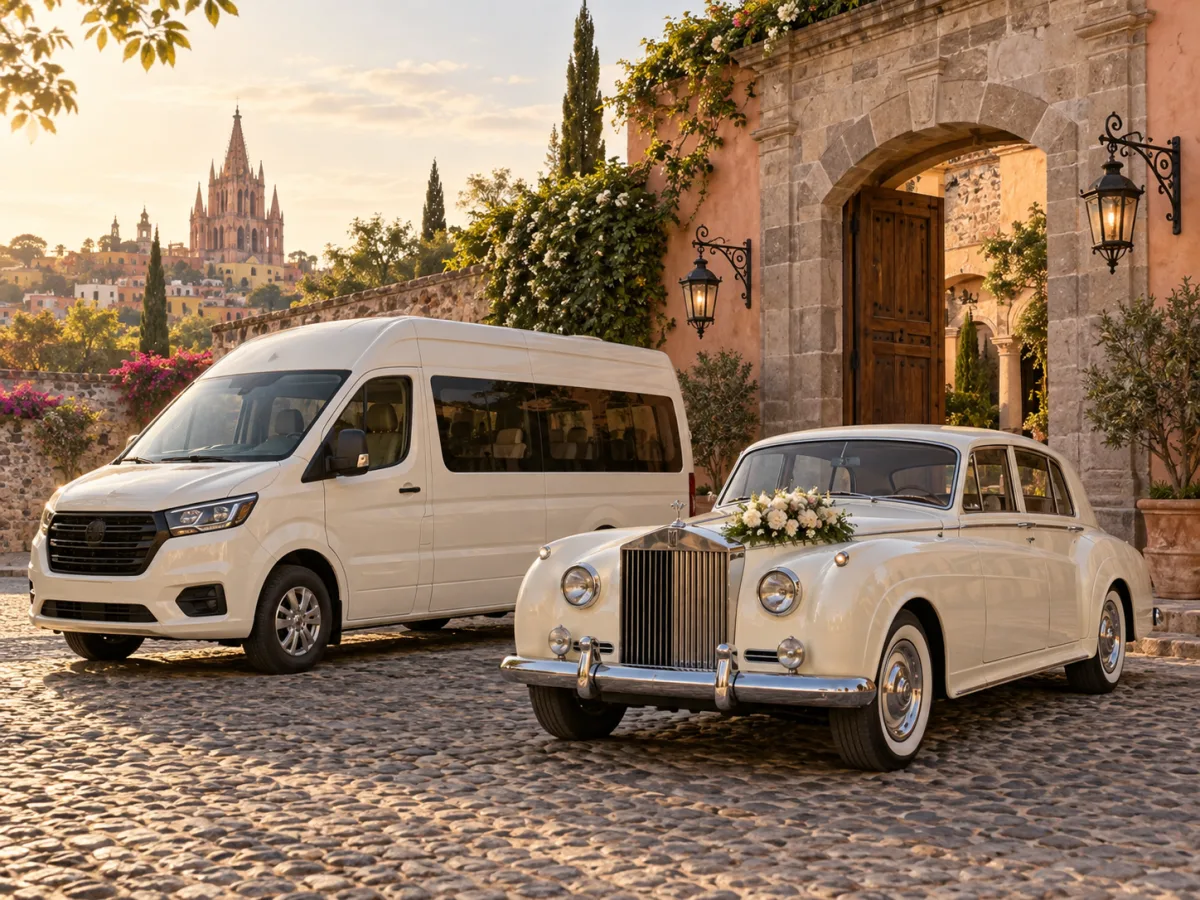
San Miguel Wedding Transportation: Shuttles, Cobblestones, and Hotel Blocks
The simplest San Miguel wedding transportation plan separates three jobs: airport arrivals, event-day routes, and late-night returns. Each job may need a different vehicle, schedule, and meeting point.
Do not begin by reserving a bus based only on the guest count. Begin with addresses. A vehicle that works for an airport transfer may be awkward or unsuitable for a narrow Centro street, while a small van that reaches a boutique hotel may require too many trips for a countryside reception. Ask a local provider to review every pickup and drop-off point before the contract is final.
The transportation plan at a glance
Transportation Guide
Match the vehicle to the route
Actual capacity and access depend on the assigned vehicle, luggage, and each address.- Vehicle TypePassenger van
Confirm the address and curb space
CapacityMedium groupPrimary Use CaseHotel routes, venue transfers, and coordinated airport groups.ConfirmSeating with luggage - Vehicle TypeMinibus or Coaster
Review every turn, entrance, and waiting point
CapacityLarger groupPrimary Use CaseMain wedding shuttles to countryside haciendas and vineyards.ConfirmRoute and configuration - Vehicle TypeFull-Size Motorcoach
Needs a confirmed route and loading point
CapacityHighest seat countPrimary Use CaseLarge group movements on roads and entrances suited to the assigned coach.ConfirmAccess and permits - Vehicle TypePrivate car or SUV
More flexible, but the stop must still be safe and legal
CapacitySmall groupPrimary Use CaseThe couple, family, guests with limited mobility, or private transfers.ConfirmAccessibility and luggage
Treat the vehicle descriptions above as planning categories, not fixed capacity or access rules. Seating changes with the vehicle configuration, luggage, child seats, mobility equipment, and the operator's permits. Street access and loading conditions can also change because of construction, festivals, religious processions, and temporary traffic controls.
Start with a route sheet
Create one line for every movement that the wedding will pay for or coordinate. Include:
- Date and service window
- Exact pickup point
- Exact destination and entrance
- Estimated passenger count
- Number of checked bags, if applicable
- Child seats, wheelchair space, or other mobility needs
- Vehicle type proposed by the provider
- Loading contact at both ends
- Backup plan if the vehicle is late or cannot reach the planned curb
This route sheet is more useful than asking for a general "wedding transportation package." It also makes competing quotes easier to compare. One proposal may include waiting, tolls, parking, dispatch, and overtime while another lists only the vehicle and driver.
Centro pickups require an address check
Centro has cobblestones, narrow streets, tight turns, limited curb space, and frequent pedestrian activity. Access is not a simple yes-or-no question for every van or bus. The useful question is whether the specific vehicle can legally and safely reach the exact hotel or meeting point at the scheduled time.
Send the provider the hotel name, street address, entrance photo, and expected number of guests. Ask for the proposed loading point in writing. If the vehicle cannot wait at the door, tell guests how far they will walk and place a coordinator at the meeting point.
Avoid publishing an unverified claim that every full-size coach is prohibited throughout Centro or that one named plaza is always an approved bus stop. Temporary closures and event operations can change. Your planner, hotel, venue, and transport operator should confirm the route close to the wedding date.
Make the walk part of the plan
A five-minute map estimate can feel much longer with cobblestones, formal shoes, heat, rain, luggage, or limited mobility. Walk the route at roughly the same time of day as the event and note:
- Uneven paving, steep sections, and steps
- Lighting after dark
- A safe place for the vehicle to load
- Space for guests to wait without blocking a doorway or street
- The route an older guest or wheelchair user would need
Guests who need assistance should have a direct plan. That may be a smaller vehicle, a different entrance, or an earlier departure with more loading time.
Airport transfers are their own project
Most wedding guests compare Querétaro (QRO), Bajío/Guanajuato (BJX), and Mexico City (MEX). Our San Miguel airport guide covers current planning times, public transportation, private transfers, and live map links.
Collect flight details before assigning vehicles. Guests on the same flight are easy to group. Guests whose scheduled arrivals are close may also share a transfer, but the first group needs to know how long it may wait. Build in time for immigration, baggage claim, terminal changes, and flight delays.
Luggage often determines vehicle size before the passenger count does. Ask the operator how many checked bags the proposed vehicle holds without using passenger seats or blocking an aisle.
For each airport movement, confirm:
- The airport and terminal
- Flight number and scheduled arrival time
- Driver meeting point and contact method
- Waiting policy for a delayed flight
- Final hotel or rental address
- Passenger and luggage count
- Child-seat and accessibility requirements
- Tolls, parking, waiting, tax, and gratuity terms
Group hotels by practical pickup zones
Hotel blocks help transportation when the properties are close enough to share a meeting point. They create delays when a route promises door-to-door service across many small hotels and vacation rentals.
Plot every accommodation before signing the shuttle contract. Then decide which model fits the group:
- One central pickup for guests who can walk comfortably
- Two or three hotel zones with separate departure windows
- Door-to-door service for a small group
- A central route plus dedicated accessible transport for guests who need it
Give each guest one assigned pickup point and departure time. A long list of optional stops invites confusion and makes head counts difficult.
Check off each item once it has an owner and a written confirmation.
Plan the trip to a countryside venue in both directions
A hacienda, vineyard, or ranch route needs a confirmed drive test. Do not copy a general estimate for "outside Centro" into the guest schedule. Drive time depends on the actual property, road conditions, event traffic, vehicle, and loading plan.
Work backward from the time guests should be seated. Include boarding, a head count, the drive, unloading, and the walk from the drop-off area to the ceremony. If several vehicles are leaving from different hotels, decide whether they should arrive together or in a controlled sequence.
The return plan deserves equal attention. Offer departure waves that match the event timeline, guest needs, and venue rules. The exact times should come from the reception schedule, not a generic template. Put a dispatcher or planner at the loading area with the guest list, driver contacts, and authority to release each vehicle.
Before the last shuttle leaves, someone should check restrooms, coat storage, the after-party area, and the venue contact's count. The contract should say what happens if the event runs late or a guest misses the final departure.
Questions to ask before signing
Ask the transport provider:
- Which vehicle is assigned to each route, and what is its passenger capacity after accounting for luggage or mobility equipment?
- Have you driven to every pickup and venue entrance on this itinerary?
- Where can each vehicle legally load, unload, and wait?
- Which permits, registrations, driver credentials, and passenger insurance apply to these routes?
- Who dispatches the vehicles, and will that person be on site or reachable throughout service?
- How do you handle delayed flights, road closures, breakdowns, and replacement vehicles?
- What do waiting, overtime, tolls, parking, tax, and gratuity cost?
- When is the passenger count locked, and what is the cancellation policy?
- Can the proposed vehicles accommodate child seats, wheelchairs, walkers, or other requested equipment?
- What is the final-departure procedure if a guest is missing?
Federal passenger and tourism transport on federal roads is regulated by Mexico's Secretaría de Infraestructura, Comunicaciones y Transportes (SICT). The exact authorization depends on the service and route. Ask the operator to identify the documents that apply rather than relying on a general statement that the company is "licensed."
Copy this for your wedding website
Wedding transportation will depart from pickup point at time. Please arrive 15 minutes early so we can board and leave together. The meeting point is map link and description. The walk includes cobblestones, so choose footwear you can manage comfortably. If you need step-free access or help reaching the pickup point, contact name and number by date. Return shuttles will leave the venue at times. The final shuttle will depart at time.
Publish the transport page after the routes are contracted, then update it when assignments are final. Keep the same information on the wedding website, hotel welcome note, and planner's message so guests are not choosing between conflicting schedules.
I would ask a San Miguel transportation provider for a route-by-route proposal and have the wedding planner own the guest manifest, pickup instructions, and final head count.
Sources and methodology
Information checked September 24, 2026. Vehicle access, loading points, travel times, permits, and prices can change. This guide does not assign fixed vehicle capacities, Centro access permissions, or local charter rates without a route-specific provider confirmation.