San Miguel Wedding Curfews, Music Cutoffs, and After-Party Planning
How noise rules, event permits, venue contracts, and alcohol hours affect wedding music and after-parties in San Miguel de Allende.
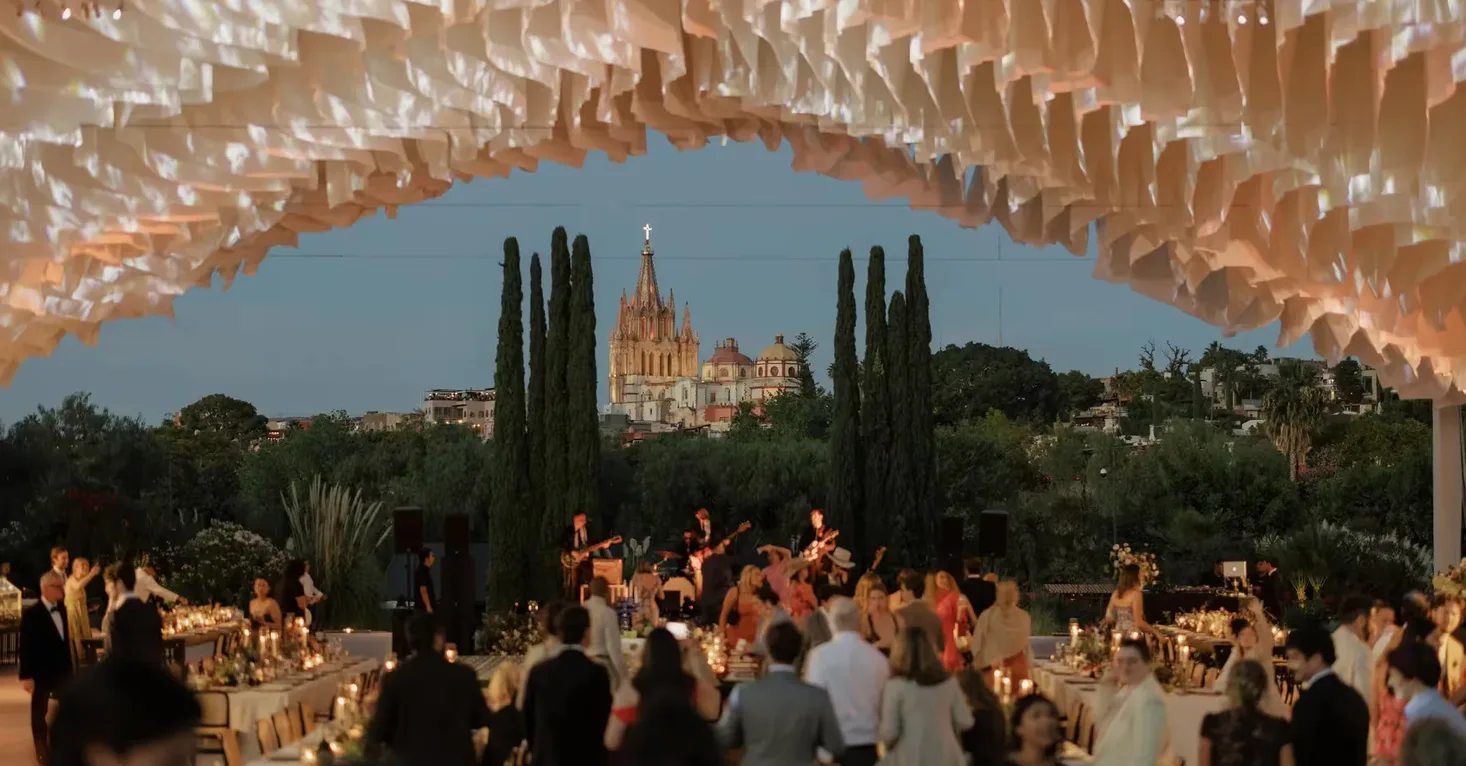
San Miguel Wedding Curfews, Music Cutoffs, and After-Party Planning
There is no single wedding curfew that applies to every venue in San Miguel de Allende. The usable music schedule depends on the property, its permits, the type of event space, nearby land uses, and the terms in the venue contract.
A rental that ends at 2:00 AM does not necessarily include outdoor music until 2:00 AM. The bar may close before guests leave. A band may have to stop outdoors while a DJ continues in an interior room. Treat each time as a separate contract term.
For planning purposes, ask the venue to put five times in writing:
- Outdoor amplified music cutoff
- Indoor amplified music cutoff
- Bar or alcohol-service cutoff
- Guest departure time
- Vendor load-out deadline
The answer should name the exact event space and date. A general promise that the party can run late is too vague for a wedding timeline.
The rules that affect a wedding schedule
Three different sets of rules can shape the end of a reception. They overlap, but they do not answer the same question.
Environmental noise limits
San Miguel's municipal environmental regulation prohibits noise above the applicable official standards. It also requires prior authorization for non-routine activities within population centers when their noise may exceed those standards. The current municipal department is the Dirección de Medio Ambiente y Sustentabilidad.
The federal standard for fixed noise sources is NOM-081-SEMARNAT-1994. Its 2013 amendment sets different limits by zone and use:
NOM-081-SEMARNAT-1994
Maximum permissible levels by zone and use under the 2013 amendment.
- Residential
Residential exteriors
Housing and residential areas defined by the standard
- Day 6:00 AM to 10:00 PM
- 55dB(A)
- Night 10:00 PM to 6:00 AM
- 50dB(A)
- Commercial
Industrial and commercial zones
Fixed sources in industrial or commercial zones
- Day 6:00 AM to 10:00 PM
- 68dB(A)
- Night 10:00 PM to 6:00 AM
- 65dB(A)
- Events
Ceremonies, festivals, and entertainment
A separate category with the duration stated in the standard
- Duration Four hours
- 100dB(A)
The table does not create a universal 10:00 PM or midnight wedding cutoff. It also does not tell a couple which category the municipality will apply to a particular reception. That depends on the site, activity, and authorization. Ask the venue which rule and permit condition govern each event space.
Official measurement is more involved than checking an app beside the dance floor. NOM-081 calls for measurements outside the property boundary in critical emission areas, with specified equipment, multiple readings, and corrections for background noise. A venue may use its own meter during an event to stay below an agreed limit, but the contract should state where and how that operational limit is measured.
Alcohol and establishment hours
The municipal Regulation of Alcoholic Beverages publishes operating hours for licensed establishments. Bars and cantinas may operate until 3:00 AM, restaurant-bars until 2:00 AM, and party halls or gardens until 1:00 AM under the listed license categories.
Those are alcohol and operating hours. They are not permission to play amplified outdoor music at the same level until closing.
An event using an occasional permit follows the schedule authorized for that event. The regulation allows requests for extended hours, subject to approval and payment. It does not promise an extension, set one standard wedding cutoff, or create an automatic exception for countryside properties.
The venue contract
A venue can impose an earlier music cutoff than the latest hour allowed by its license or permit. Hotels also have guest rooms, restaurants, neighboring homes, and internal operating policies to consider. A private estate may have a rental end time that leaves room for breakdown but no late-night music.
The contract is where the broad rules become a usable schedule. If the proposal only lists the end of the rental period, ask for a written addendum covering music, bar service, guest departure, and load-out.
Noise Ordinance Guide
What each venue type must confirm
The permit, contract, and assigned event space determine the usable schedule.- Zone / TypeOutdoor Event in Centro
The rental end time does not set the music cutoff
Outdoor CutoffVenue and permit specificBasis for LimitNOM-081, authorization, and contractWhat to ConfirmGet the outdoor cutoff and indoor room in writing - Zone / TypeCountryside Hacienda
A rural location is not an automatic exemption
Outdoor CutoffVenue and permit specificBasis for LimitEnvironmental rules still applyWhat to ConfirmConfirm outdoor music, alcohol, and departure separately - Zone / TypeLicensed Bar or Club
Public hours may differ for a private event
Outdoor CutoffLicense and booking specificBasis for LimitExterior noise remains regulatedWhat to ConfirmConfirm hours, capacity, entry, and exclusive use
Centro and countryside venues
Use location to organize the venue search. The permit and contract still control the schedule.
Centro venues often sit close to homes, hotel rooms, and narrow streets. An outdoor band or DJ may have an earlier contractual cutoff, followed by a move indoors. The property should identify the indoor room, its capacity, ventilation, bar setup, and music end time. "Indoor option available" is not enough if the room cannot hold the full guest count.
Countryside haciendas may have more distance from neighboring properties, which can make a later outdoor schedule possible. Their location does not exempt them from environmental rules. Ask for the approved schedule for your date and the name of the party responsible for permits.
Transport matters more when the venue is outside town. A first shuttle gives guests an earlier return option. The final shuttle should leave after the contracted guest-departure time, with enough time for loading. Roads, vehicle size, and the venue's loading area will determine the actual schedule.
Indoor after-parties at hotels
An indoor room can preserve the flow of the reception after outdoor music ends. It works best when the room is reserved from the start, not treated as an informal backup.
Ask for a floor plan using the expected guest count, DJ position, bar, late-night food, and circulation space. Confirm whether exterior doors must remain closed during amplified music and whether staff will control access to terraces or courtyards.
Published room capacities need context. Rosewood San Miguel de Allende, for example, lists its ballroom for up to 200 guests and La Cava for 14 guests. La Cava may suit a private dinner or a small gathering. It should not be planned as a 50-person dance room.
If a Live Aqua proposal includes the Allende ballroom or another interior room, request the sound terms for that assigned space. A room name alone does not establish the late-night schedule.
Moving to a bar or nightclub
An off-site after-party can work when the reception venue has no suitable indoor room. It adds another arrival, another guest list, and another set of operating terms.
Check normal business hours first, then ask about private-event hours. Quince currently publishes closing at 11:30 PM Tuesday through Saturday, so it needs a separate written agreement before it can be treated as a post-midnight option. A San Miguel visitor guide lists El Manantial's hours as ending at midnight. Both may make sense for welcome drinks or an earlier gathering, depending on the date.
A nightclub with a late license may be a better fit for dancing after midnight. Confirm the opening days, minimum spend, capacity, age policy, dress code, entry procedure, and whether the booking reserves a room or only a group of tables. Public hours can change for holidays and private events.
Do not send guests to a second location on speculation. The planner should have a signed booking, a named contact on duty, and a clear transport or walking plan.
What to put in the venue agreement
Use the following questions to review a proposal with the venue and planner. Liability language should be reviewed by a qualified local lawyer if it becomes part of the contract.
Music and measurement
- What time must outdoor amplified music end in each contracted space?
- Can acoustic music or background music continue afterward? If so, until when?
- What time must indoor amplified music end?
- Is there a decibel limit set by the venue or permit?
- Where will the venue measure it, and who has authority to reduce the volume?
Permits and responsibility
- Which permits apply to the event?
- Who obtains and pays for them?
- Will the couple receive copies before the wedding?
- Who responds if an inspector or police officer attends the event?
- How does the agreement allocate costs caused by a venue permitting problem or a vendor who ignores written sound instructions?
The indoor move
- Which room is reserved, and is it exclusive to the wedding?
- What is its capacity in the planned layout?
- Are the bar, restrooms, air conditioning, furniture, and sound system included?
- Must doors and windows remain closed?
- When can the production team enter the room for setup and testing?
Overtime and departure
Request an itemized schedule for venue rental, security, cleaning, bar staff, audio technicians, transportation, and vendor overtime. The quote should state when each charge begins. Also confirm whether equipment must leave that night or can be collected the next morning.
A workable late-night plan
A late reception needs a sequence that matches the signed cutoffs. Start with the fixed end times, then build the entertainment and transport schedule backward.
For a reception that moves indoors, the band might finish outside before the outdoor cutoff while late-night food opens in the next room. The DJ can begin after guests move. This transition only works if the indoor room, staffing, and sound check are already in the production schedule.
For a countryside venue, schedule at least one early return and one final departure if the guest list and transport plan support it. The exact times should follow the venue contract. Avoid copying sample shuttle times from another wedding.
Review the signed venue terms with your planner, music provider, bar team, and transportation company.
Sources checked
This guide was checked on November 7, 2026. Venue policies, permits, and operating hours can change, so current written terms from the property control the event plan.
- NOM-081-SEMARNAT-1994 and its measurement method
- 2013 amendment establishing the current NOM-081 limits by category
- Municipal Environmental Regulation of San Miguel de Allende
- 2023 Regulation of Alcoholic Beverages for San Miguel de Allende
- 2026 Municipal Revenue Law
- Rosewood San Miguel de Allende event spaces
- Quince San Miguel de Allende hours and capacity
Compare venue spaces and save a shortlist in the San Miguel wedding venue directory. Before booking, send each property the same questions about music, permits, overtime, and transport so the proposals are easier to compare.
More from the journal
Keep reading

San Miguel Wedding Transportation: Shuttles, Cobblestones, and Hotel Blocks
Plan airport transfers, Centro pickups, hacienda shuttles, return trips, and hotel blocks for a destination wedding in San Miguel de Allende.
Read article →
Centro Hotel vs. Countryside Hacienda: Which San Miguel Venue Fits Your Wedding?
A practical comparison of San Miguel de Allende venue types: walkable Centro historic hotels versus expansive countryside haciendas, vineyards, and ranches.
Read article →
How to Get Married in San Miguel de Allende: Civil, Symbolic, and Catholic Weddings
A current guide to civil marriage requirements in Guanajuato, symbolic ceremonies, and Catholic wedding preparation in San Miguel de Allende.
Read article →